Tsinghua University

News & Updates

July 18, 2026

Prof. Tong Wang Attends WAIC 2026 in Shanghai and Receives the Youth Outstanding Paper Award

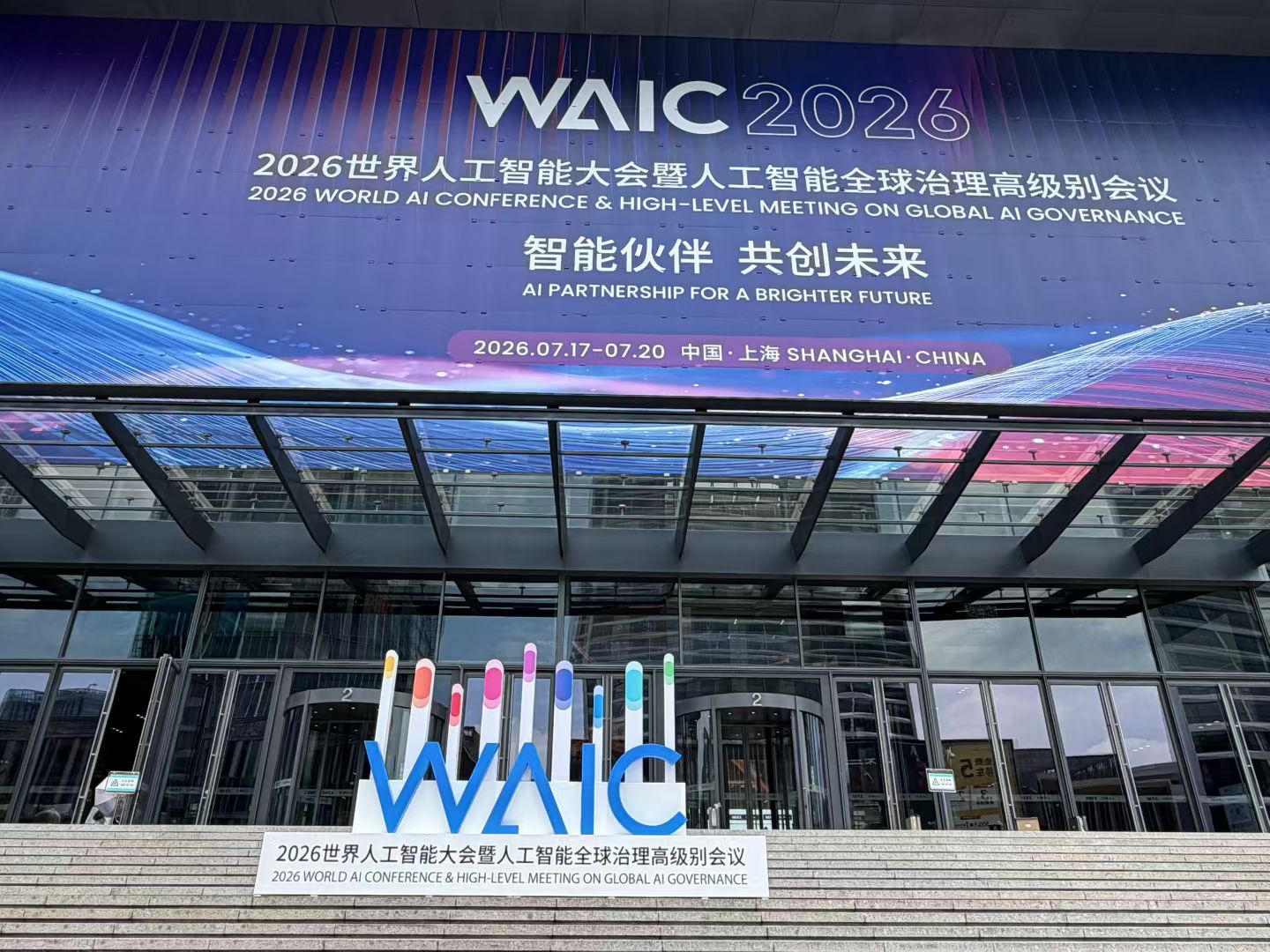
At the 2026 World Artificial Intelligence Conference (WAIC), held in Shanghai from July 17 to 20, Prof. Tong Wang from Tsinghua University attended the event across three venues: the Expo Centre, Zhangjiang Science Hall, and the West Bund International Convention and Exhibition Center. This ninth edition of WAIC was the largest to date, featuring more than 140 forums, over 1,000 exhibitors, and a landmark in-person keynote by Chinese President Xi Jinping. During the conference, Prof. Wang was honored as a finalist for the Youth Outstanding Paper Award for his work on quantum-accuracy protein molecular dynamics simulation. His paper, 'Quantum-Level Precision Protein Molecular Dynamics Simulation,' presents the AI²BMD framework, which enables full-atom protein dynamics simulation with quantum-level accuracy while achieving a speedup of millions of times over traditional quantum methods and a substantial gain in accuracy over classical approaches. The work has been highlighted in multiple Nature Reviews articles and perspectives as a major breakthrough in biomolecular dynamics modeling, with promising implications for enzyme engineering and precision medicine. In addition to attending the conference, Prof. Wang accepted interviews with the Chinese Association for Science and Technology and several media outlets, and he was invited to participate in a live interview with Shanghai First Finance.
Conference
Prof. Tong Wang Attends WAIC 2026 in Shanghai and Receives the Youth Outstanding Paper Award - 1
1 / 5
July 13, 2026

Prof. Tong Wang Published a Commentary Article in Nature Computational Science

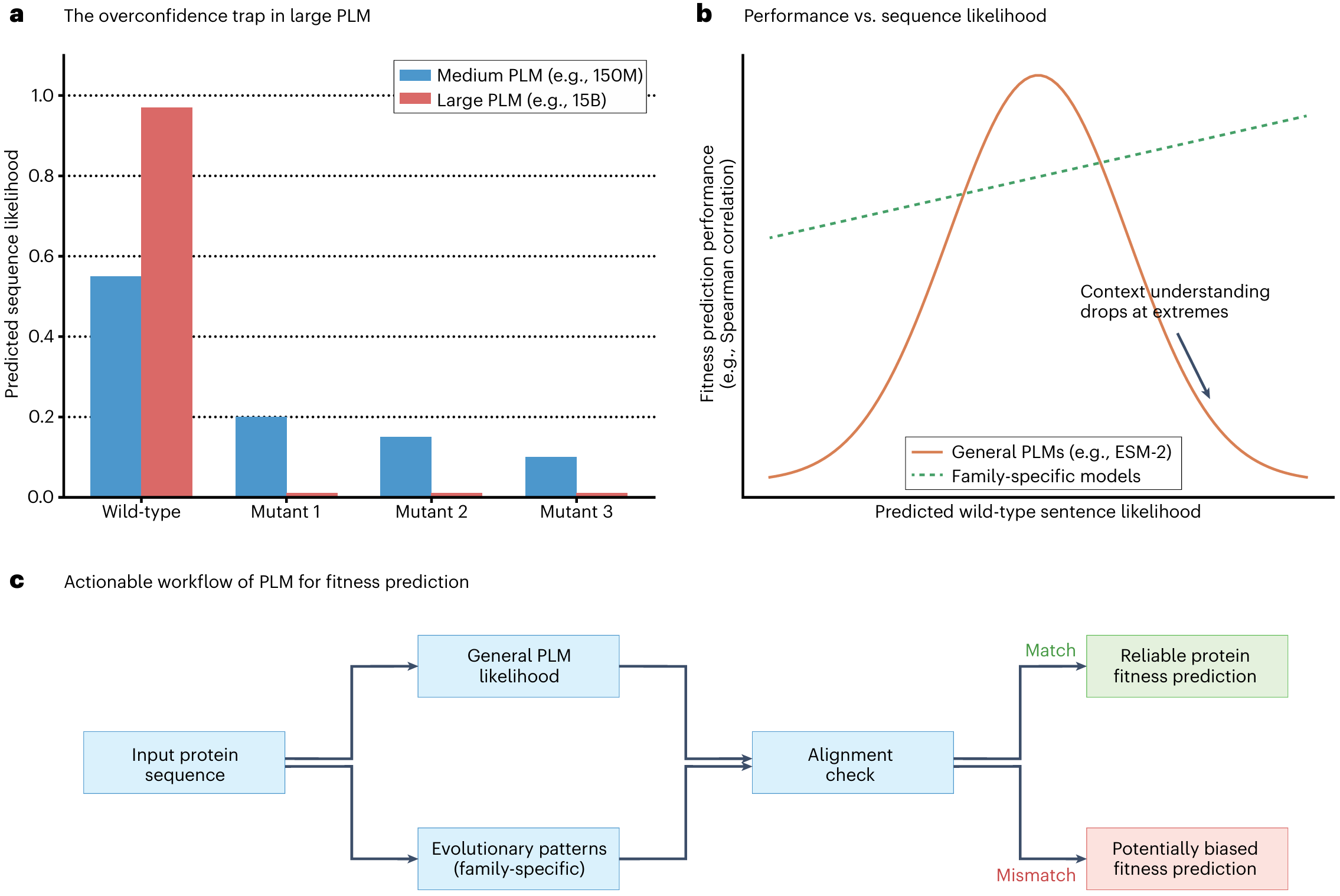
Prof. Wang published a commentary article titled "Protein fitness prediction with language models" in Nature Computational Science by invitation. Addressing the mechanisms and scaling behaviors of protein language models in high-throughput fitness prediction, the article reveals that larger models do not invariably yield better performance. Instead, scaling up can trigger an overconfidence trap, where large models assign higher likelihoods to wild-type sequences at the expense of substitution mutants. Furthermore, Prof. Wang highlights a unique bell-shaped relationship between predictive performance and sequence likelihood in general protein language models. To ensure reliable predictions, the article proposes a standardized workflow for alignment checks against evolutionary patterns before practical application. Finally, Prof. Wang mentions the development of unified multimodal protein foundation models that explicitly integrate evolutionary data with sequence, structure, and microenvironmental dynamics, paving the way for a virtual lab capable of dynamically predicting protein fitness under varying contexts.

Publication
Prof. Tong Wang Published a Commentary Article in Nature Computational Science
July 3, 2026

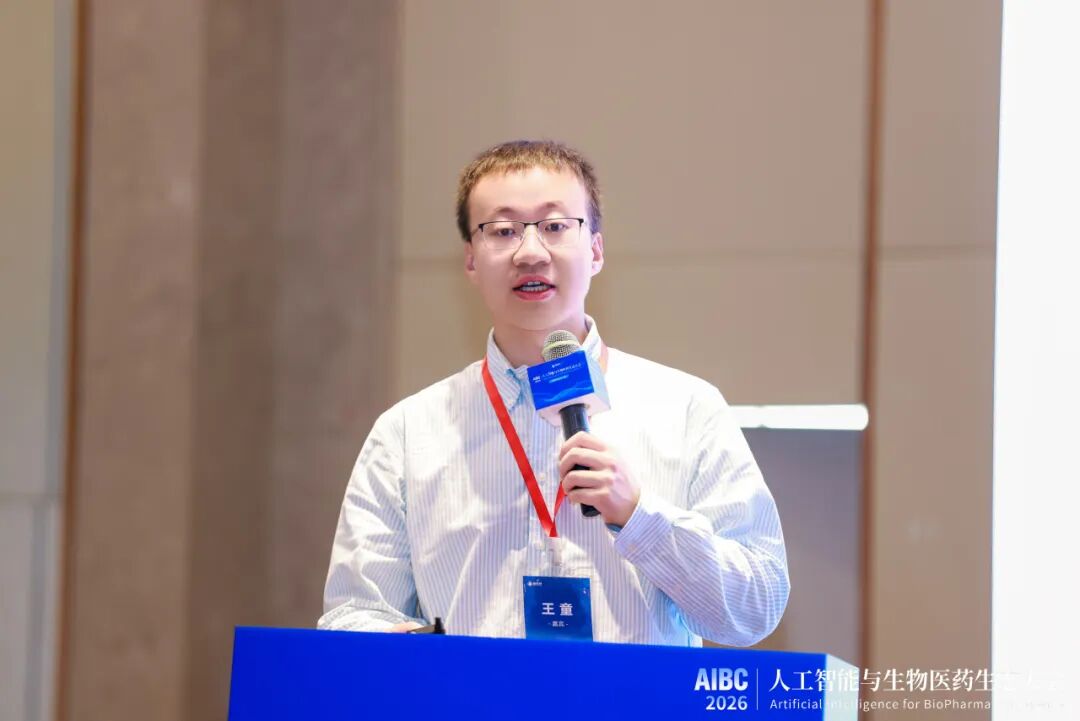
Prof. Tong Wang Introduces ViSNet-PIMA at AIBC 2026

The 2026 Artificial Intelligence and Biopharmaceutical Ecosystem Conference (AIBC2026) was held in Shanghai from July 2 to 3, bringing together more than a thousand representatives from universities, research institutes, pharmaceutical companies, AI technology firms, CROs, investors, and industry service platforms to discuss the latest progress and opportunities at the intersection of AI and biomedicine. As AIBC entered its sixth edition, this year's conference focused on how AI-driven drug discovery is moving from conceptual exploration to real research workflows, with discussions spanning algorithmic breakthroughs, experimental validation, engineering deployment, and translational impact. At the conference, Prof. Tong Wang delivered an invited talk titled "ViSNet-PIMA: Biological Dynamic Structure Calculation and Simulation Based on Precise Modeling of Long-Range Interactions." AI-driven dynamic structure simulation is one of the most critical scientific questions and technical challenges of the post-AlphaFold era. A central difficulty lies in enabling deep-learning force fields to accurately model the long-range, non-local interactions that govern proteins and other biological macromolecules. ViSNet-PIMA achieves precise modeling of long-range interactions, including polarization and electrostatics, while AI²BMD-PIMA enables quantum-accuracy calculations and simulations of complete biomolecular systems for the first time. Compared with AI²BMD, AI²BMD-PIMA delivers a further 100% improvement in accuracy, opening new opportunities for the precise design, optimization, and engineering of drug targets and therapeutic molecules. We welcome researchers and users interested in AI-driven biomolecular simulation to explore PIMA and join the AI²BMD user community for discussion, support, and collaboration. The second image is the AI²BMD user group QR code, scan it to join the community.

Conference
Prof. Tong Wang Introduces ViSNet-PIMA at AIBC 2026 - 1
1 / 2
June 27, 2026

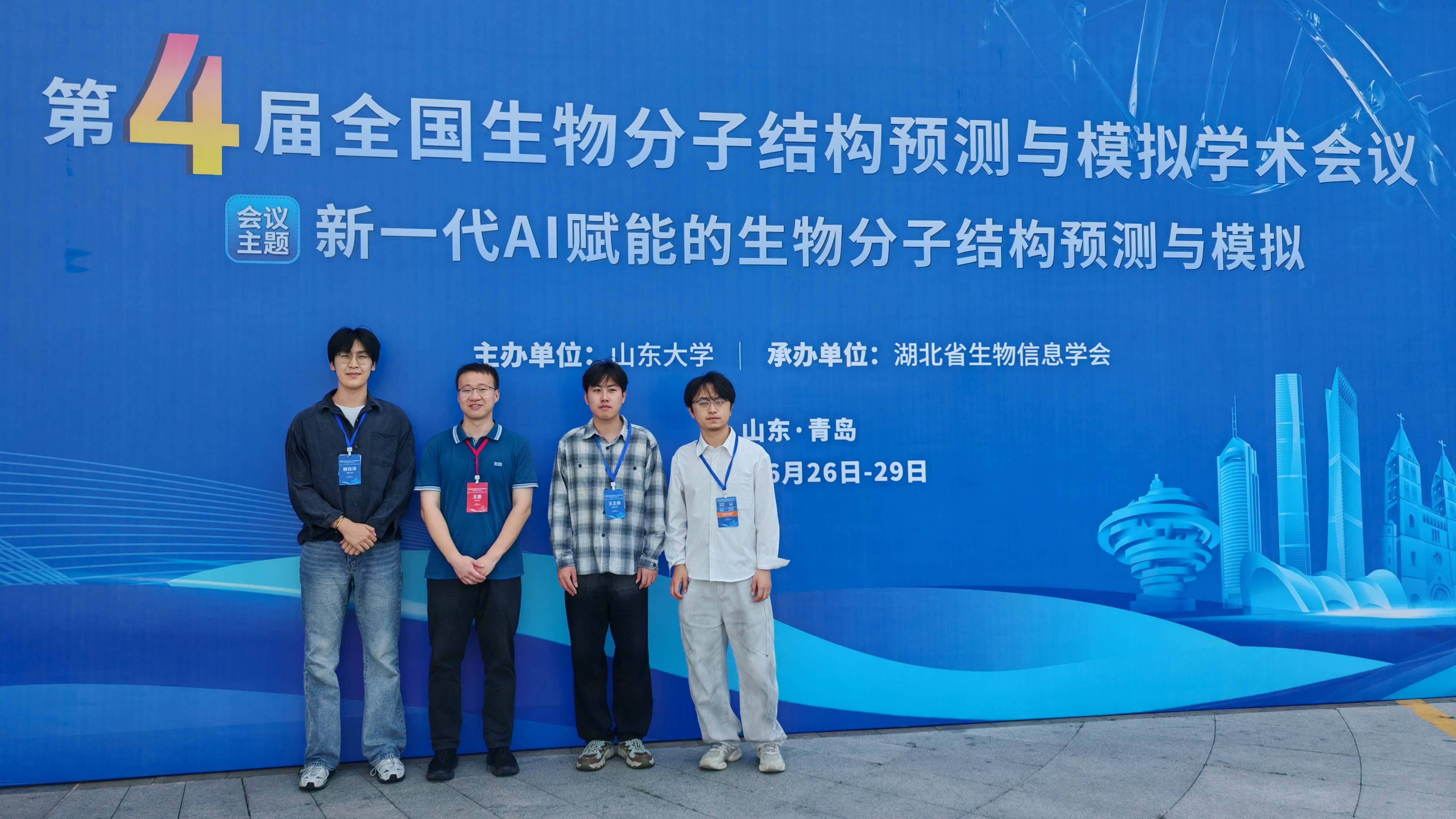
Prof. Wang's Team Attends the 4th National Academic Conference on Biomolecular Structure Prediction and Simulation

From June 27 to 29, Prof. Wang's team attended the 4th National Academic Conference on Biomolecular Structure Prediction and Simulation in Qingdao. The conference featured a series of keynote speeches and presentations by leading experts in the field, covering topics such as protein structure prediction, molecular dynamics simulations, and machine learning applications in biomolecular research. Prof. Wang delivered an invited talk on the latest advancements in AI-driven biomolecular simulations, highlighting the lab's recent contributions to the field.

Conference
Prof. Wang's Team Attends the 4th National Academic Conference on Biomolecular Structure Prediction and Simulation - 1
1 / 2
May 29, 2026

Prof. Wang's Team Reviews Advances in AI-Driven Drug Molecule Interaction Modeling

Prof. Wang's group published a comprehensive review titled "How Advanced Artificial Intelligence Technologies Shape Drug-Drug and Drug-Target Interaction Modeling" in Advanced Science. This article systematically surveys the evolutionary landscape of AI-driven prediction algorithms for drug-drug interactions and drug-target interactions, introducing advancements across feature engineering, model architectures, and learning paradigms. It highlights critical challenges in both fields, such as generalization in cold-start scenarios and the shortcut learning problem, and discusses future directions including joint synergistic optimization, causal inference integration, and leveraging large language models to overcome data limitations.

Publication
Prof. Wang's Team Reviews Advances in AI-Driven Drug Molecule Interaction Modeling
December 6, 2025

Prof. Wang Receives 2025 Capital Frontier Academic Achievement Award

Prof. Wang was honored with the 2025 Capital Frontier Academic Achievement Award. Organized by the Beijing Computer Society, this prestigious selection involved a rigorous two-stage peer review process aimed at highlighting top-tier innovations at the intersection of Artificial Intelligence and Computer Science. Prof. Wang attended the award ceremony and delivered an invited talk, sharing insights on the development of the AI2BMD framework and its impact on the field.

Award
Prof. Wang Receives 2025 Capital Frontier Academic Achievement Award - 1
1 / 2
November 28, 2025

Prof. Wang's Team Reviews Advances in AI-Driven Biomolecular Simulations

Prof. Wang's group published a comprehensive review titled "Recent Advances in Artificial Intelligence-Driven Biomolecular Dynamics Simulations Based on Machine Learning Force Fields" in Current Opinion in Structural Biology. This article systematically surveys the landscape of Machine Learning Force Fields (MLFFs), evaluating architectures ranging from classically parametrized terms to end-to-end neural networks. It highlights how MLFFs resolve the long-standing trade-off between computational efficiency and quantum mechanical accuracy, and discusses emerging universal models like AI2BMD.

Publication
Prof. Wang's Team Reviews Advances in AI-Driven Biomolecular Simulations
November 4, 2025

Prof. Wang Featured in Interview with China Science Communication

On November 4, Prof. Wang was interviewed by China Science Communication, a leading platform for public science education. In the feature video, Prof. Wang introduced the fundamentals of molecular dynamics simulations to a general audience. He discussed the current challenges facing the field and explained how our laboratory is utilizing artificial intelligence to overcome these bottlenecks, making complex scientific concepts accessible to the public.

Lab News
September 11, 2025

Prof. Wang Delivers Invited Speech at BIOHK2025 AI Forum

On September 11, Prof. Wang delivered an invited speech at BIOHK2025 in Hong Kong. He presented at the AI Forum, a highlight session co-hosted by the School of Life Sciences, Tsinghua University. As part of the university's delegation, Prof. Wang shared insights on the intersection of artificial intelligence and life sciences, contributing to the significant presence of Tsinghua researchers at this international convention.

Conference
Prof. Wang Delivers Invited Speech at BIOHK2025 AI Forum - 1
1 / 2
August 18, 2025

Prof. Wang Presents Latest Research at ACS Fall 2025

Prof. Wang attended the American Chemical Society (ACS) Fall 2025 meeting held in Washington, DC from August 17–21. On August 18, he delivered two presentations titled "The Coming Age of AI-Driven Biomolecular Dynamics Simulation with Ab Initio Accuracy" and "Machine Learning Force Field for AI-Driven Protein Molecular Dynamics Simulation." These talks highlighted the laboratory's recent breakthroughs in applying machine learning to enhance the accuracy and efficiency of protein molecular dynamics simulations.

Conference
Prof. Wang Presents Latest Research at ACS Fall 2025 - 1
1 / 2
June 2025

Prof. Tong Wang Presents at Major Conferences in June

Concurrent with the establishment of the new laboratory, Prof. Wang participated in a series of academic conferences throughout June. He delivered an invited speech at the National Conference on Artificial Intelligence Biology in Hangzhou on June 7, followed by another invited speech at the Artificial Intelligence for BioPharma Conference in Shanghai on June 12. Subsequently, on June 15, he presented a keynote speech at the National Conference of Biomolecular Structure Prediction and Simulation in Changchun.

Conference
Prof. Tong Wang Presents at Major Conferences in June - 1
1 / 3
June 9, 2025

Official Launch of the Wang Lab at Tsinghua University

We are excited to announce that the Wang Lab was officially established at Tsinghua University on June 9, 2025. Our new research facilities are located in the Biomedicine Hall, Tsinghua University, with Prof. Tong Wang's office in Room A216-A and the main laboratory in Room A208. This marks the beginning of a new chapter, and we welcome researchers, students and anyone who is interested in our lab research to visit our new space to discuss innovation and collaboration.

Lab News
Official Launch of the Wang Lab at Tsinghua University - 1
1 / 4